Content Menu
● Overview of Carbide Studs and Their Importance
>> Key Benefits of Carbide Studs
● Leading Carbide Studs Manufacturers and Suppliers in Europe
>> SITEK – Germany
>> Portugal's Carbide Studs Industry
>> France's Prestigious Manufacturers
● Advanced Manufacturing Process of Carbide Studs
● Applications of Carbide Studs in Industry
● OEM Services and Customization Options
● Sustainability Commitment and Quality Assurance
● Market Trends and Future Outlook
● Conclusion
● Frequently Asked Questions (FAQs)
>> 1. What materials are used to make carbide studs?
>> 2. Which industries benefit most from carbide studs?
>> 3. Can carbide studs be customized to specific dimensions?
>> 4. How does the sintering process improve carbide stud properties?
>> 5. Are European carbide studs environmentally sustainable?
Carbide studs are essential components in diverse industrial applications due to their exceptional hardness, wear resistance, and durability. Europe hosts a number of top-tier manufacturers and suppliers specializing in carbide studs, offering cutting-edge OEM services to global brands, wholesalers, and producers. This article explores the leading European carbide studs manufacturers, their advanced production processes, and the industries they serve, providing a comprehensive guide for international buyers.
Overview of Carbide Studs and Their Importance
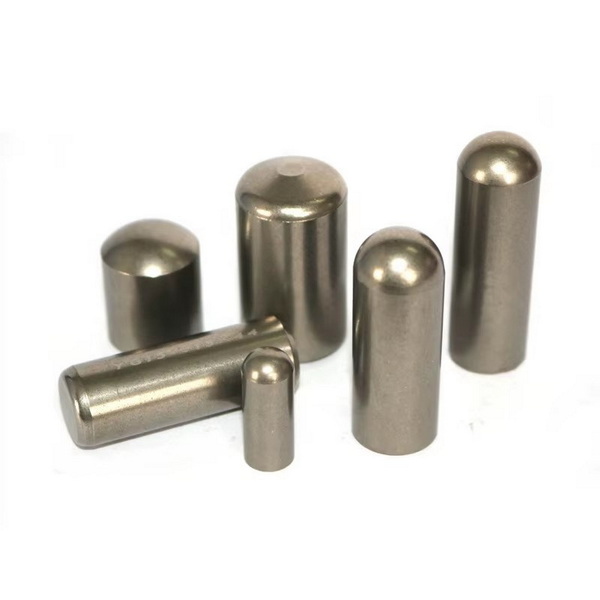
Carbide studs, typically made from tungsten carbide combined with metallic binders such as cobalt or nickel, offer outstanding hardness and toughness. These qualities make carbide studs indispensable in high-wear, high-impact environments such as mining, automotive, construction, and manufacturing industries.
Key Benefits of Carbide Studs
- Superior wear resistance
- High impact strength
- Corrosion and heat resistance
- Extended equipment lifespan
- Customizable for specific applications
Leading Carbide Studs Manufacturers and Suppliers in Europe
SITEK – Germany
SITEK, part of BETEK GmbH & Co. KG, is a premier German manufacturer of carbide powder and carbide-tipped studs, particularly for winter tires. Known as "safety technology," SITEK delivers full in-house production from raw material to finished spike, offering OEM services matched precisely to client specifications.
Their carbide studs excel in automotive traction applications and industrial tool components, featuring advanced mixing and machining technologies.
Portugal's Carbide Studs Industry
Portugal has emerged as a key European hub for carbide studs manufacturing, with companies like ETMA (Empresa Técnica de Metalurgia, S.A.), ASM Comércio de Manufaturas, and HSTOOLS leading the sector.
- ETMA focuses on precision forging and stamping of carbide stud components, delivering consistent high performance for tough applications.
- ASM manufactures tungsten carbide studs and fasteners customized for precision wear resistance and corrosion protection.
- HSTOOLS specializes in PCD/PCBN cutting tools and carbide studs for automotive industries, offering turnkey OEM solutions.
Portuguese manufacturers integrate advanced processes such as automated powder mixing, precision CNC machining, and computerized quality control, ensuring globally recognized certifications like ISO 9001 and ISO 14001.
France's Prestigious Manufacturers
French companies like Carbure du Chéran, Tivoly SA, and Pisten Tool are renowned for tungsten carbide products, including carbide studs engineered for precision and stability.
- Carbure du Chéran is a family-owned business excelling in powder metallurgy and customized carbide parts production.
- Tivoly boasts over a century of history in cutting tools manufacture with a strong European logistics network.
- Pisten Tool focuses on tungsten carbide rods and wear-resistant parts with a significant European market presence.
These companies offer custom OEM solutions that meet high industry standards and enable international collaboration.
Advanced Manufacturing Process of Carbide Studs
The production of carbide studs is a multi-stage process combining traditional metallurgy with modern automation:
1. Powder Preparation and Mixing
Tungsten carbide powder is mixed with metallic binders like cobalt in exact ratios for optimal hardness and toughness.
2. Compacting (Green Part Formation)
Powder mixtures are pressed into molds under high pressure, creating "green" parts shaped roughly like the final product.
3. Sintering
Green parts undergo sintering in high-temperature inert atmosphere furnaces (1400°C-1600°C), fusing the powder into dense, cohesive carbide studs.
4. Precision Machining
CNC grinding or electro-discharge machining refines dimensions and finishes, achieving tight tolerances.
5. Surface Treatments and Coatings
Additional plating or corrosion-resistant coatings improve longevity and performance under harsh conditions.
6. Quality Control
Continuous inspections with hardness tests, dimensional checks, and metallurgical analyses ensure consistent reliability.
European manufacturers often employ cutting-edge innovations such as additive manufacturing for prototyping and rapid tooling, as well as automated laser marking for traceability of individual studs. This blend of traditional metallurgical expertise with Industry 4.0 technologies ensures that their carbide studs offer unparalleled consistency and customization capabilities.
Applications of Carbide Studs in Industry
Carbide studs serve critical roles in various sectors, such as:
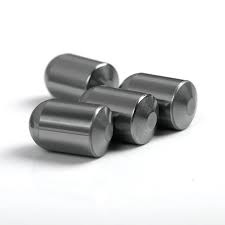
- Mining: Installed on high-pressure grinding rollers (HPGR) to enhance crushing efficiency of ores like copper, gold, and iron. These studs significantly boost lifespan and performance of heavy mining machinery.
- Automotive: Used as tire studs to provide traction on ice, snow, and rough terrain, improving vehicle safety. Carbide's hardness prevents premature wear, maintaining grip integrity for long periods.
- Construction and Manufacturing: Replace conventional wear parts in machinery, conveyors, roadheaders, and cutting tools, extending equipment life and reducing downtime. Specialized carbide studs are vital in abrasive environments, including quarrying and concrete demolition.
Additionally, carbide studs are utilized in specialized sectors such as aerospace and defense, where materials face extreme conditions. Here, carbide studs maintain structural integrity, contributing to overall equipment reliability and safety.
OEM Services and Customization Options
European manufacturers pride themselves on flexible OEM services for foreign brands and producers, enabling full customization such as:
- Customized stud dimensions and thread types
- Select carbide grades and hardness levels
- Variety of surface finishes and corrosion-resistant coatings
- Prototype development and performance testing
This supports seamless integration into client products worldwide. Many manufacturers also offer engineering collaboration, helping clients optimize stud designs for specific application parameters, thus improving cost-efficiency and wear performance.
Sustainability Commitment and Quality Assurance
Leading European manufacturers follow stringent environmental standards like ISO 14001 to minimize waste and emissions. Tungsten carbide scrap recycling programs and eco-friendly production methods are common practices.
Product quality strictly adheres to ISO 9001 certification, with full material traceability and continuous improvements to meet global buyer expectations. Environmental responsibility encompasses efforts to reduce energy consumption in sintering processes and to implement water recycling systems within manufacturing plants.
Furthermore, many carbide studs producers invest in worker safety, maintaining high standards in workplace conditions and continuous staff training, guaranteeing consistent product excellence and ethical manufacturing.
Market Trends and Future Outlook
The carbide studs market in Europe is evolving with ongoing research into new carbide composites and nanostructured materials to boost performance beyond traditional limits. Enhanced binder systems and advanced coating technologies aim to prolong product life further.
Rising demand for sustainable manufacturing is driving innovation in recycling carbide materials and lowering carbon footprints, aligned with global green manufacturing initiatives.
Customization through digital manufacturing, rapid prototyping, and AI-driven quality analytics are expected to become standard practice, providing clients with faster delivery and greater precision.
The increasing shift toward heavier mechanization in industries such as mining and automotive, coupled with strict safety and environmental regulations, will keep demand for high-quality carbide studs strong in Europe and globally.
Conclusion
Europe is home to some of the most innovative and quality-driven carbide studs manufacturers and suppliers worldwide. With countries like Germany, Portugal, and France leading in precision carbide technology and OEM customization, the region provides durable, high-performance carbide studs for mining, automotive, construction, and specialized industrial sectors.
European manufacturers focus on advanced production processes, strict quality assurance, and environmental responsibility to meet the evolving demands of global markets. Their investment in research, sustainability, and industry 4.0 technologies ensures a reliable supply of carbide studs that can be tailored perfectly to client requirements for longevity and efficiency.
Frequently Asked Questions (FAQs)
1. What materials are used to make carbide studs?
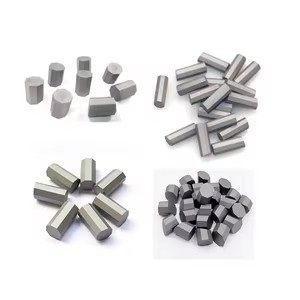
Carbide studs are primarily made from tungsten carbide powder combined with metallic binders such as cobalt or nickel to enhance toughness and wear resistance.
2. Which industries benefit most from carbide studs?
Mining, automotive (particularly tire studs), construction, and manufacturing industries use carbide studs where wear resistance and durability are critical.
3. Can carbide studs be customized to specific dimensions?
Yes, most European manufacturers provide full OEM services, enabling customization of dimensions, thread types, hardness, and coatings.
4. How does the sintering process improve carbide stud properties?
Sintering binds the carbide particles at high temperatures under controlled atmospheres, enhancing density, hardness, and structural integrity essential for industrial applications.
5. Are European carbide studs environmentally sustainable?
Yes, manufacturers follow ISO 14001 environmental standards, including recycling tungsten carbide scrap and minimizing emissions to ensure sustainable production.


