Content Menu
● Introduction
● What Are Carbide Round Moulds?
>> Material Science
● Manufacturing Process: Powder to Precision Tool
>> 1. Powder Preparation
>> 2. Mixing and Granulation
>> 3. Compaction
>> 4. Sintering
>> 5. Machining and Finishing
>> 6. Quality Assurance
● Leading Carbide Round Moulds Manufacturers and Suppliers in the United States
>> Ultra-Met Carbide Technologies
>> Cole Carbide Industries
>> Mastercut Tool Corp.
>> Custom Tool & Grinding
>> Kennametal Inc.
● Applications of Carbide Round Moulds
● Selecting the Right Manufacturer or Supplier
● Technical Advances and Industry Trends
● Conclusion
● FAQ: Carbide Round Moulds Manufacturers and Suppliers
>> 1. What industries most often use carbide round moulds?
>> 2. How do manufacturers ensure the quality of carbide round moulds?
>> 3. What's the difference between standard and custom carbide moulds?
>> 4. How long does a high-quality carbide round mould last?
>> 5. What are the newest trends in carbide round mould manufacturing?
Introduction
Carbide round moulds have become indispensable to modern industry due to their extraordinary hardness, durability, and consistent performance. U.S. manufacturers and suppliers offer some of the world's most advanced solutions, meeting the rigorous demands of sectors like metal forming, electronics, automotive, aerospace, and medical devices. This comprehensive guide explores the manufacturing science, market leaders, selection strategies, and application scope of carbide round moulds, equipping decision-makers with insights needed to choose optimal partners and products.
What Are Carbide Round Moulds?
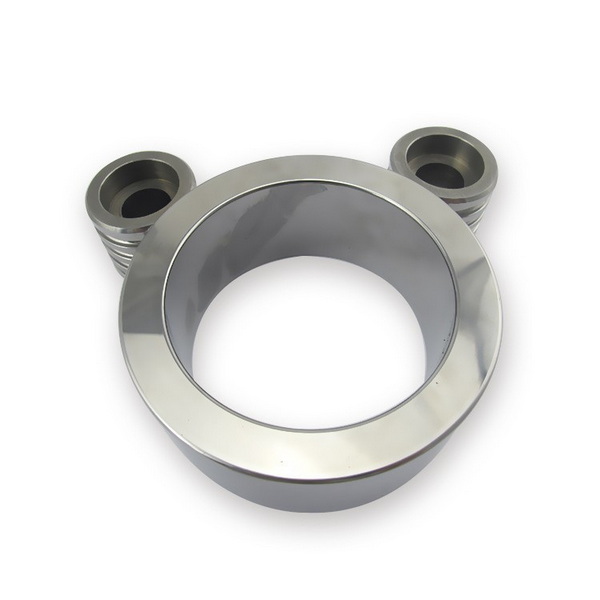
At the core of every precision stamping or forming operation lies the carbide round mould—a robust tooling solution engineered from tungsten carbide alloyed with binder metals such as cobalt or nickel. This composition endows moulds with remarkable resistance to heat, wear, and deformation, making them the go-to choice for high-volume and high-pressure industrial environments.
Material Science
Tungsten carbide's microstructure consists of extremely hard particles bonded within a metal matrix. Grain size, binder ratio, and sintering process all affect the resulting mould's physical properties. Manufacturers customize these variables for specific industries and tasks, allowing for moulds that balance wear resistance, toughness, and exact dimensional tolerances.
Manufacturing Process: Powder to Precision Tool
Creating reliable carbide round moulds requires meticulous execution across these stages:
1. Powder Preparation
Production begins with pure tungsten powder derived from tungsten ore. The powder is mixed with carbon sources and subjected to high temperatures (typically 1400°C-2000°C) to form tungsten carbide—a process called carburization. Binder metals (usually cobalt) are then introduced, and the mix is processed in ball mills to achieve a uniform particle distribution and optimal grain size.
2. Mixing and Granulation
Uniformity is critical—any inconsistency can cause weak spots and premature failure. Additionally, additives such as wax or paraffin might be incorporated to improve handling and green strength during downstream operations.
3. Compaction
The prepared powder mixture is loaded into precision dies; the hydraulic press exerts massive force, shaping the mixture into a “green part.” This un-sintered part has just enough mechanical strength to withstand handling, though it remains far from finished in density and durability.
4. Sintering
Green parts are placed in a highly controlled furnace atmosphere—usually vacuum or inert gas—where temperatures reach 1400°C-1600°C. The melting binder liquefies and diffuses through the structure, bonding tungsten carbide grains into a solid, nearly pore-free matrix. The sintering step shrinks parts by up to 25%, so initial designs compensate for this reduction.
5. Machining and Finishing
The sintered mould is ultra-hard but necessitates further finishing. Grinding, milling, and sometimes Electrical Discharge Machining (EDM) impart fine features, extreme tolerances, and mirror-smooth surfaces. Final steps may include polishing or application of advanced coatings to boost wear resistance and surface quality.
6. Quality Assurance
Manufacturers employ methods like ultrasonic inspection, dimensional analysis, and microstructure evaluation to ensure zero defects, tight tolerances, and high uniformity. Only fully tested moulds are shipped to clients, ensuring dependable performance from the first cycle onward.
Leading Carbide Round Moulds Manufacturers and Suppliers in the United States
Several American companies have earned reputations for exceptional engineering and customer support:
Ultra-Met Carbide Technologies
Ultra-Met delivers highly customizable carbide round moulds for an array of complex applications. They combine in-house metallurgical expertise, advanced CNC equipment, and rigorous material selection to ensure remarkable product longevity and performance. Their offerings include both standard blanks and custom geometries for industries spanning metalworking, oil and gas, and electronics.
Cole Carbide Industries
Cole Carbide, founded in Michigan, sets industry standards through its multi-generational heritage, robust R&D investments, and proprietary products such as Indexa-V carbide drilling systems. Their award-winning facility, ISO certifications, and customer-centered engineering drive superior accuracy for demanding sectors like automotive and aerospace.
Mastercut Tool Corp.
With over three decades of experience, Mastercut Tool ensures consistent quality through automated production systems and a highly skilled workforce. Their carbide product lineup includes endmills, cutting tools, and custom solutions for precision manufacturing, supporting large and small orders alike.
Custom Tool & Grinding
Located in Pennsylvania, Custom Tool & Grinding specializes in the rapid delivery of tailor-made carbide tooling for aerospace, medical, and general manufacturing. Their combination of expert machinists and advanced CNC systems allows them to fulfill unique, small-batch, or short-lead projects.
Kennametal Inc.
Kennametal boasts a global operation, deep R&D capabilities, and a vast range of indexable and solid carbide round moulds. Their products suit diverse needs—from high-performance automotive machining to specialized electronics fabrication—and they provide robust technical and customer support.
Applications of Carbide Round Moulds
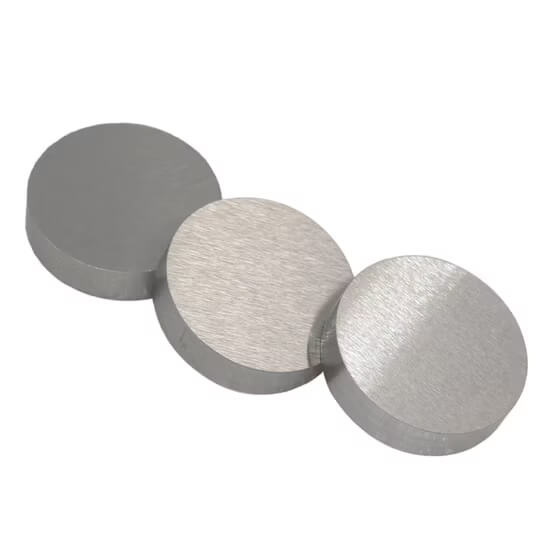
Carbide round moulds are vital in:
- Metal stamping, cold-forming, and extrusion operations requiring non-stop reliability and wear resistance.
- Electronics and semiconductor industries, where micron-level accuracy and repeatability are essential.
- Automotive and aerospace manufacturing to ensure high output over extended production cycles.
- Medical device and food equipment sectors, demanding contaminant-free surfaces and durable operation.
Selecting the Right Manufacturer or Supplier
When choosing a carbide round mould partner, consider these factors:
- Proven ISO certifications, customer references, and industry awards.
- Capacity for full customization—whether adapting parts for exotic alloys or challenging volumes.
- Material science expertise reflected in binder selection, grain size control, and thermal management.
- Technical support staff are ready to assist on design, troubleshooting, and post-delivery adjustments.
Technical Advances and Industry Trends
The carbide round mould market is rapidly evolving through:
- Additive manufacturing (3D printing) enabling faster prototyping and low-volume custom mould production.
- Automation for powder mixing, pressing, and finishing processes to minimize human error.
- Advanced inspection technologies (ultrasonics, laser scanning) for zero-defect delivery.
- Sustainable sourcing and recycling initiatives focused on reducing manufacturing waste.
With ongoing innovations, U.S. suppliers continue to lead quality improvements and operational efficiencies—vital for global competitiveness and client satisfaction.
Conclusion
The United States stands out globally for its advanced Carbide Round Moulds Manufacturers and Suppliers. By mastering material science, precision engineering, quality assurance, and customer support, top manufacturers deliver tools that redefine reliability and performance in demanding environments. Whether for high-volume metal forming, electronics, or specialty fabrication, commitment to customization and technical excellence remains the hallmark of industry leaders. As process automation, additive manufacturing, and sustainability programs gain uptake, American carbide round mould suppliers offer resilient, future-ready solutions for every manufacturing need.
FAQ: Carbide Round Moulds Manufacturers and Suppliers
1. What industries most often use carbide round moulds?
Carbide round moulds are found in metalworking, electronics, automotive, aerospace, food processing, and medical device manufacturing.
2. How do manufacturers ensure the quality of carbide round moulds?
They use ISO certification, advanced dimensional inspection, ultrasonic defect testing, and rigorous process control from powder preparation to finishing.
3. What's the difference between standard and custom carbide moulds?
Standard moulds are stocked for commonly used shapes and sizes; custom moulds are engineered for unique geometries, materials, and operational requirements.
4. How long does a high-quality carbide round mould last?
Durability is impacted by material choice and manufacturing precision, but premium moulds typically last much longer than steel equivalents, often several production cycles before replacement.
5. What are the newest trends in carbide round mould manufacturing?
Key trends include increased automation, additive manufacturing for custom designs, improved inspection technologies, and sustainability initiatives focusing on recycling and responsible sourcing.


