Content Menu
● Introduction
● Manufacturing Expertise and Capabilities
● Core Manufacturing Processes
>> Cemented Carbide Preparation and Sintering
>> Machining and Direct Carving
>> EDM and Micro-Hole Processing
>> Heat Treatment and Case Construction
>> Ultra-Fine Polishing and Lapping
>> Surface Coating and Enhancement
>> Meticulous Inspection and Total Quality Management
● R&D, Prototyping, and Customization
● Company Spotlights
>> Tokyo Byora Koki Co., Ltd.
>> Strecon
>> Fuji Die Co., Ltd.
>> Mizuho Industries Co., Ltd.
>> JHW (Japan Hardware)
● Innovative Technologies Driving Leadership
>> Direct Carving and Integrated Machining
>> Electric Discharge Machining for Complexity
>> Heat Treatment and Multi-Material Integration
>> Intelligent Fluid and Mirror Polishing
>> Inspection and Quality Feedback
● Critical Applications of Japanese Carbide Forging Dies
>> Automotive & Aerospace
>> Electronics & Semiconductors
>> Medical Devices
>> Construction & Energy
● How Japanese Carbide Suppliers Integrate with Chinese OEM Factories
● R&D, Future Trends, and Customization
● Conclusion
● Frequently Asked Questions (FAQ)
>> 1. What are the main materials used in Japanese carbide forging dies?
>> 2. How do Japanese carbide forging dies outperform global alternatives?
>> 3. Can Japanese carbide forging dies be customized for special applications?
>> 4. What industries most frequently use Japanese carbide forging dies?
>> 5. How do global OEMs combine Japanese dies and Chinese manufacturing?
Introduction
Japan's industrial legacy is rooted in its dedication to precision and reliability. In sectors such as automotive, aerospace, electronics, and medical manufacturing, carbide forging dies play an essential role in forming, shaping, and assembling critical components. Japanese manufacturers and suppliers have built an enviable reputation for quality, technological innovation, and robust customer service—making them trusted partners for global OEMs, brands, and production houses. This article unveils the leaders in the field, highlighting their expertise, technical prowess, and how they continually advance what's possible in carbide forging die technology.
Manufacturing Expertise and Capabilities
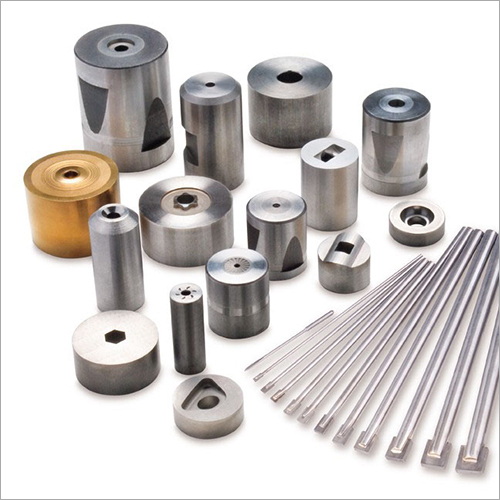
Japanese carbide forging die producers combine legacy craftsmanship with modern technology. Companies like Tokyo Byora Koki, Strecon, and Fuji Die have pioneered unique manufacturing workflows involving direct carving, mirror-finish lapping, high-precision EDM, multi-axis CNC, and proprietary surface treatments.
Core Manufacturing Processes
Cemented Carbide Preparation and Sintering
The journey of a high-performance forging die begins with the preparation of tungsten carbide powder, carefully mixed and sintered under strictly controlled conditions. This results in an exceptionally tough and hard base material, ideal for resisting wear, deformation, and heat during repeated forging cycles.
Machining and Direct Carving
Advanced CNC machining centers and five-axis mills enable the direct carving of complex die shapes. This bypasses traditional roughing and provides micron-order tolerances, supporting intricate wire forms, micro-holes, and bespoke geometries required for next-generation components.
EDM and Micro-Hole Processing
Electrical Discharge Machining (EDM)—using copper, copper-tungsten, or graphite electrodes—allows for the precise creation of micro-holes and irregular features within dies. This process is essential for components demanding ultra-fine wire diameters, deep-hole capabilities, and multi-feature forming.
Heat Treatment and Case Construction
Forging dies often contain a cemented carbide insert housed within a high-strength steel case. Japanese manufacturers utilize lathe and mill operations to shape these cases, followed by controlled heat treatments that boost hardness and durability, ensuring the internal fit is precise and robust.
Ultra-Fine Polishing and Lapping
Surface finishing is a mark of Japanese quality. Mirror-finish lapping and intelligent fluid polishing techniques are deployed to achieve surface roughness as low as Rz0.4 or less, minimizing friction and guaranteeing consistent wire or component dimensions.
Surface Coating and Enhancement
Many companies offer in-house PVD, CVD, and advanced nano-coatings (such as diamond-like carbon) to further increase die longevity, reduce friction, and improve the manufacturability of difficult materials like titanium or high-strength alloys.
Meticulous Inspection and Total Quality Management
Precision inspection is non-negotiable. Every die is subjected to 3D measurement (such as Zeiss CMMs), laser scan analysis, and microscopic examination. Full data feedback loops support total quality management, with continuous improvement built into the workflow from design to delivery.
R&D, Prototyping, and Customization
Manufacturers continually invest in R&D, collaborating with universities, technical institutes, and industry partners. Research covers new alloys, forming simulation, fluid polishing innovation, and rapid prototyping, ensuring dies can meet the evolving demands of tomorrow's industries.
Company Spotlights
Tokyo Byora Koki Co., Ltd.
Tokyo Byora Koki has been at the forefront of cold heading and forging die production since 1961. Notable technological advances include “Tokyo-ACE,” a mass-produced tungsten carbide die system crafted via direct carving and simultaneous lapping to reduce lead times and dramatically extend die lifetime. Their lineup supports the world's smallest screws, micro-component dies, TAPTITE fastener dies, and highly specialized titanium alloy parts.
Strecon
Strecon serves global markets with high-quality carbide tooling designed for cold forming, cutting, and electronic part fabrication. The company provides both finished carbide dies and preforms for in-house customer machining, supplying precision jigs, round bars, progressive molds, and gear dies—all delivering micron-level accuracy and proven performance.
Fuji Die Co., Ltd.
Fuji Die specializes in wear-resistant cemented carbide tools, delivering custom forging dies, drawing dies, powder metallurgy dies, and more. An ISO9001 certification backs their commitment to international quality, with multiple plants and an extensive global client base.
Mizuho Industries Co., Ltd.
Mizuho is acclaimed for its cemented carbide dies tailored to automotive, electronics, semiconductor, and construction sectors. Their experience in micro-hole and deep-hole processing, combined with robust finishing protocols, sets them apart in the high-reliability component space.
JHW (Japan Hardware)
JHW pushes the envelope in die innovation, particularly with segment dies for cold heading, forming, and wire production. Their research and development arm has pioneered intelligent fluid polishing—eliminating affected layers and achieving stable, high-quality polishing on even the most complex die geometries.
Innovative Technologies Driving Leadership
Direct Carving and Integrated Machining
By streamlining machining and lapping into concurrent processes, Japanese manufacturers have redefined efficiency. This innovation enables unprecedented precision while lowering traditional production times—meeting customer needs for rapid delivery and reducing manufacturing costs.
Electric Discharge Machining for Complexity
Japanese factories harness advanced Sinker EDM and Wire-cut EDM systems to machine micro-holes, deep holes, and complicated internal die shapes, essential for state-of-the-art electronics and precision medical devices.
Heat Treatment and Multi-Material Integration
Unique shrink fitting and post-processing techniques allow the assembly of high-strength steel cases with carbide inserts, achieving exceptional service life—even under the punishing loads of automotive or aerospace production.
Intelligent Fluid and Mirror Polishing
Products such as gear dies, punch dies, and progressive mold components benefit from next-generation polishing methods. Intelligent fluid polishing efficiently removes solidified layers formed during EDM, vastly improving surface integrity while minimizing micro-defects—a major leap versus conventional practices.
Inspection and Quality Feedback
Embedding digital measurement at every stage guarantees that dies provided to OEM customers are defect-free and meet exacting standards. With rigorous QC systems and full documentation, Japanese suppliers track each product's journey and drive ongoing improvements.
Critical Applications of Japanese Carbide Forging Dies
Automotive & Aerospace
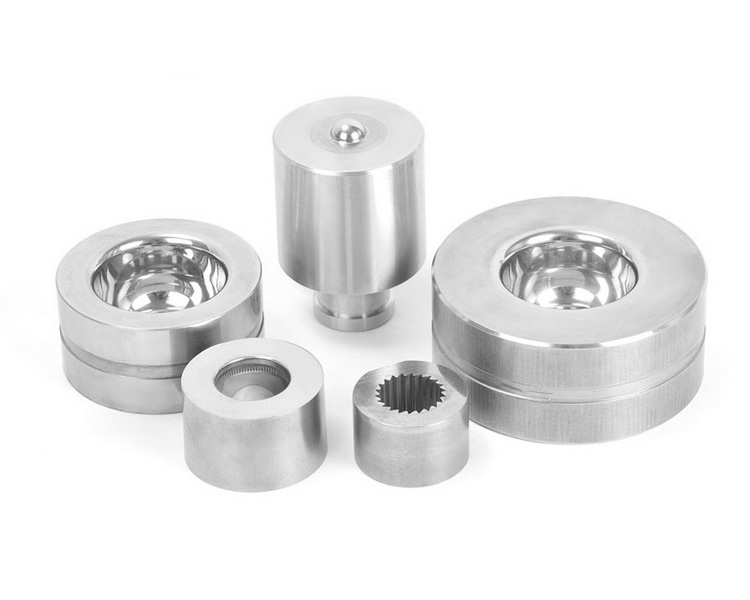
Japanese carbide dies power the formation of airbag wires, sensor pins, micro fasteners, and structural components in vehicles and aircraft. The need for ultra-durable, fatigue-resistant tools is paramount.
Electronics & Semiconductors
The electronic industry relies on precision wire drawing dies to produce connectors, micro-leads, and specialized circuits. As devices get smaller, the tolerances required for these dies grow ever tighter.
Medical Devices
Surgeons and hospitals depend on forged wires, biopsy needles, catheters, and implantable materials produced using carbide dies with biocompatible finishing and ultra-clean surfaces.
Construction & Energy
From wire mesh and cable to specialty kitchenware and renewable energy hardware, carbide forging dies enable the production of reliable, cost-effective, and high-strength components essential for modern infrastructure.
How Japanese Carbide Suppliers Integrate with Chinese OEM Factories
Global brands increasingly collaborate with Chinese OEMs to gain cost advantages for large-volume supply. High-quality stainless steel capillary tubes, coiled tubes, plates, and carbon steel materials are produced under robust QC in China, then processed or assembled using Japanese dies. This hybrid approach delivers both precision and scalability, essential for competing at the top end of international markets.
Chinese manufacturing supports Japanese suppliers by providing materials suited for advanced forming, securely matching performance and cost expectations for automotive, medical, and electronic supply chains.
R&D, Future Trends, and Customization
Japanese suppliers remain at the cutting edge by investing in next-generation R&D. This includes efforts in nano-scale die coatings, materials simulation, rapid prototyping, and AI-aided design. The result is a steady stream of new materials, coatings, and process enhancements—such as eco-friendly recycling, sustainability measures, and optimization for nanowires and new alloy products.
Customers benefit via rapid die customization, with options for special alloys, micro-plating, and exotic geometries tailored to unique applications, ensuring complete readiness for future manufacturing challenges.
Conclusion
Japanese carbide forging dies manufacturers and suppliers stand at the intersection of tradition, innovation, and global reach. Their relentless focus on precision, advanced machining, total quality management, and technological evolution drives the performance of modern industry across automotive, electronics, medical, and infrastructure segments. The synergy between Japanese die excellence and Chinese OEM material supply delivers unbeatable value, scalability, and engineering assurance for worldwide brands. As new fields and higher standards emerge, these suppliers will continue to shape the future of forging, wire drawing, and critical industrial processes.
Frequently Asked Questions (FAQ)
1. What are the main materials used in Japanese carbide forging dies?
Typically, high-grade tungsten carbide is used, valued for its ultimate hardness and resistance to wear and deformation throughout demanding forging and wire drawing processes.
2. How do Japanese carbide forging dies outperform global alternatives?
Japanese dies offer superior tool life, consistency, and micron-level accuracy through innovations such as direct carving, advanced EDM processing, and fluid polishing—ensuring higher efficiency and better long-term cost savings.
3. Can Japanese carbide forging dies be customized for special applications?
Yes, manufacturers routinely provide custom shapes, micro-diameter dies, alternative coatings, and special alloy dies, meeting the specific requirements of complicated production lines in diverse industries.
4. What industries most frequently use Japanese carbide forging dies?
Automotive, electronics, medical devices, aerospace, construction, and new energy sectors all require high-precision, durable wire and component forming dies to maintain the highest safety, reliability, and product performance standards.
5. How do global OEMs combine Japanese dies and Chinese manufacturing?
OEMs source cost-efficient, high-quality stainless steel and carbon steel parts from Chinese manufacturers and process or assemble these using Japanese carbide forging dies, benefiting from precision, efficiency, and international supply chain integration.


