Content Menu
● Introduction
● What Are Carbide Forging Dies?
● European Industry Overview
● Leading Carbide Forging Dies Manufacturers and Suppliers in Europe
>> KOJO Fastening
>> T&T Hardmetaal Gereedschappen BV
>> UK Carbide Dies Ltd
>> Rubig Group
>> ATI ZKM Forging (Poland)
>> Grewin Carbide
● Technical Specifications and Innovations
● Carbide Forging Dies Manufacturing Process
● Applications of Carbide Forging Dies
● Quality Standards and Certifications
● Customization and OEM Services
● Market Trends and Challenges
● Practical Tips for Sourcing Carbide Forging Dies in Europe
● Conclusion
● FAQ: Carbide Forging Dies Manufacturers and Suppliers
>> 1. What advantages does tungsten carbide offer over other die materials?
>> 2. How do European manufacturers maintain high quality in carbide forging dies?
>> 3. Can carbide forging dies be customized for unique applications or branding?
>> 4. Which industries benefit most from European carbide forging dies?
>> 5. What should buyers consider when sourcing carbide forging dies from European suppliers?
Introduction
Carbide forging dies are an indispensable tool in manufacturing, used for forming precision metal components under high pressure and temperature. European manufacturers and suppliers of carbide forging dies are recognized worldwide for technical excellence, innovation, and reliability. This article surveys the leading players in the industry, investigates technical processes, explains key standards, and offers practical advice for OEMs, distributors, and procurement teams seeking trusted sources for carbide forging dies.

What Are Carbide Forging Dies?
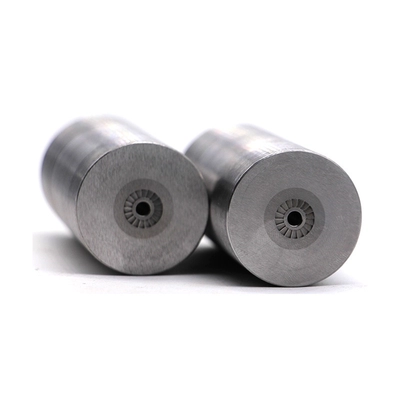
Carbide forging dies, mainly composed of tungsten carbide, offer exceptional hardness and wear resistance. These properties make them particularly suitable for mass production of metal parts—such as automotive fasteners, gears, bushings, and specialty components, where high dimensional accuracy and longevity are required. Distinguished from steel dies by their extended lifespans and superior temperature resistance, carbide dies are a crucial investment for manufacturers seeking to minimize downtime and maximize throughput.
European Industry Overview
Europe hosts an advanced ecosystem of carbide forging dies manufacturers and suppliers, spread across Germany, UK, Italy, Netherlands, Austria, Poland, and the Czech Republic. The region is defined by high quality regulations, robust R&D, precise CNC machining, and strong export capacity. European suppliers provide tailored solutions to demanding industries: automotive, aerospace, heavy machinery, construction, medical devices, and electronics. Many maintain global partnerships and offer full OEM services, supporting international brand owners, wholesalers, and production enterprises with proactive customer service and technical expertise.
Leading Carbide Forging Dies Manufacturers and Suppliers in Europe
KOJO Fastening
KOJO Fastening is a standout European supplier, well-known for its wide range of carbide forging dies and precision fastener tooling. With robust ISO certifications and the latest CNC grinding and EDM technologies, KOJO combines quality with agility, delivering promptly to clients worldwide. Their experience with international OEMs makes them a preferred choice for scalability and customization.
T&T Hardmetaal Gereedschappen BV
T&T Hardmetaal Gereedschappen BV, based in the Netherlands, has built a reputation as an expert in cold forming tungsten carbide dies. Their ISO9001:2008 certification and customer-first approach allow them to excel in problem-solving for complex applications. The company supplies bespoke die designs to European fastener and stamping industries, backed by deep materials knowledge and process control.
UK Carbide Dies Ltd
Specializing in both hot and cold forging die technology, UK Carbide Dies Ltd provides licensed Torx® and Taptite® tooling, precision punches, inserts, and segmented dies. The firm's focus on custom engineering, on-time delivery, and multi-sector support makes it a leader among UK-based suppliers. Their solutions support the automotive, aerospace, and construction segments, always focusing on strict quality management.
Rubig Group
Austria's Rubig Group leads in the production of complete die forged components, integrating machining, heat treatment, and surface finishing within a single value chain. Rubig's engineering teams frequently collaborate with customers to optimize production and solve intricate forging challenges, particularly in complex aerospace and industrial applications.
ATI ZKM Forging (Poland)
ATI ZKM Forging, operating in Poland, is a major supplier of forged aerospace and industrial components, including in-house carbide die design and manufacturing. They leverage advanced simulation, machining, and non-destructive testing to maintain rigorous standards and support demanding international clients.
Grewin Carbide
With a robust European sales network, Grewin Carbide supplies high-performance carbide dies and cutting tools. Their products meet stringent German, Italian, and UK specifications, and are favored by manufacturers who prioritize long service life, dimensional accuracy, and responsive after-sales service.
Technical Specifications and Innovations
Carbide forging dies produced in Europe exhibit advanced mechanical and thermal properties thanks to continuous innovation in materials and process engineering. Key grades—like YG11C, YG15, YG18C, YG20 and YG25C—are selected for high hardness, transverse rupture strength, and excellent thermal stability.
- Typical carbide die grades deliver hardness values of HRA88-92.
- Precision manufacturing yields tolerances as tight as 0.002mm, and surface roughness within microns.
- Modern die fabrication includes vacuum sintering, automated grinding, and multi-stage polishing, resulting in tools suitable for even the most stressed forging operations.
- High Velocity Oxy-Fuel (HVOF) coating processes produce dense tungsten carbide layers, enhancing wear resistance and part legibility.
- Metallurgical analyses show layer thicknesses around 0.17mm, optimal adherence, and low porosity.
Such technical advances deliver longer service life, higher productivity, and stable performance in large-volume production, as proven by manufacturing studies—where HVOF coated dies enabled a 37.5% productivity increase over traditional tooling and sharply lowered machine downtime.
Carbide Forging Dies Manufacturing Process
The European manufacturing process for carbide forging dies is complex and engineered to yield maximum durability:
- Material Selection: Only select grades of tungsten carbide are used, with strictly controlled composition to maximize wear resistance and toughness. In critical applications, the cobalt binder ratio is adjusted between 6% and 15% to optimize performance.
- Preheating and Forging: Raw mold blanks are forged and spheroidized-annealed to distribute carbides evenly. This microstructural refinement prevents cracking and ensures longer die life.
- Heat Treatment: Carefully regulated heating and cooling cycles ensure core strength and surface hardness. Tempering is critical for resisting thermal fatigue and maximizing red rigidity.
- Precision Grinding: Micron-level grinding and CNC threading guarantee precise fit and form. Diamond wheels and robotic control systems are standard practice for accurate finishing.
- Polishing and Finishing: Mirror-level surface polish reduces friction and improves die lifespan in high-pressure applications.
- Inspection and Testing: Each die is subjected to detailed dimensional checks, hardness analysis, and surface roughness inspection using advanced metrology.
- Coating: For extreme applications, a thermal spray process such as HVOF is used to coat with a layer of tungsten carbide, resulting in further improvements in wear resistance and part quality.
- Quality Control: All stages are checked by computer-aided systems and experienced engineers to ensure that each die meets strict client and regulatory requirements.
These advanced processes have become standard in Europe, resulting in a reputation for premium carbide forging dies recognized throughout the global marketplace.
Applications of Carbide Forging Dies
European-made carbide forging dies support multiple industries:
- Automotive: Essential for making high-performance bolts, screws, nuts, and engine parts.
- Aerospace: Required for forged landing gear, brackets, and airframe elements—where weight and durability are critical.
- Construction: Used in the production of structural fasteners and steel assemblies for bridges and towers.
- Heavy Machinery: Crucial for industrial gears, bearings, and chains that operate under high load.
- Electronics and Medical Devices: Provide precision forging for connectors and implantable devices requiring absolute dimensional accuracy.
OEM clients favor European suppliers for superior surface finish, reliability, and ease of customization. These applications benefit not only from the mechanical properties of carbides, but from the manufacturers' technical assistance in selecting the right grade, size, and shape for each project.
Quality Standards and Certifications
European carbide forging dies manufacturers invest heavily in certification and process validation. Common standards include:
- ISO 9001 for total quality management.
- ISO 14001 for environmental protection and production sustainability.
- RoHS compliance for electronic and automotive sector products.
These certifications ensure not just product consistency, but compliance with global market access requirements. Clients purchasing from Europe's leading suppliers are assured of process transparency, continual improvement, and international audit readiness.
Customization and OEM Services
Customization is a key differentiator for European carbide forging dies manufacturers and suppliers. Typical services include:
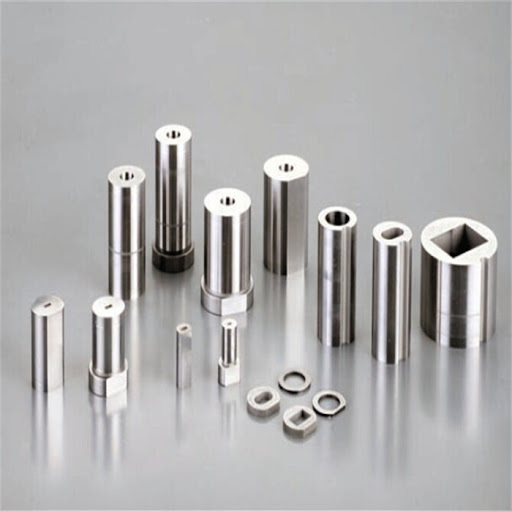
- Complete design adaptation for non-standard or complex geometries.
- Branding and logo engraving for OEM and private label clients.
- Technical consulting, rapid prototyping, and sample production before full-scale rollout.
- Flexible contract manufacturing, supporting low to high MOQ (minimum order quantities).
- Ongoing after-sales support for troubleshooting and process optimization.
This ability to react quickly to customer needs, develop purpose-built dies, and implement brand- and market-specific requirements positions European suppliers as ideal partners for international trade and manufacturing.
Market Trends and Challenges
In recent years, several trends have shaped the European carbide forging dies industry:
- Increased demand from the automotive, electronics, and green energy sectors, driven by lightweight and miniaturized parts.
- Greater R&D investment in surface treatment, micro-geometry design, and AI-driven quality control.
- Growth of rapid prototyping, which shortens lead times for new products and supports efficient market entry.
- Stricter environmental and recycling regulations, influencing material sourcing and process waste management.
- Expansion of global distribution networks, making European dies accessible to buyers in Asia, North America, and the Middle East.
Challenges include raw material price volatility, the necessity of continuous training for both operators and design engineers, and increased competition from emerging Asian suppliers. Despite these challenges, European firms maintain leadership through technical innovation, customer relationship management, and regulatory compliance.
Practical Tips for Sourcing Carbide Forging Dies in Europe
For international buyers or those establishing OEM partnerships with European carbide forging dies manufacturers and suppliers, consider the following best practices:
- Verify supplier certifications and request detailed technical documentation.
- Communicate clear application requirements: material grade, part geometry, production speed, and expected service life.
- Ask about trial samples, inspection reports, and real-world case studies.
- Inquire about after-sales service, troubleshooting support, and warranty policies.
- Explore customization options for logos, branding, or packaging to align with your market positioning.
Building a strategic relationship with a reliable European supplier can ensure steady production, minimize quality incidents, and contribute to long-term profitability.
Conclusion
Europe's carbide forging dies manufacturers and suppliers embody technical excellence, continuous improvement, and unwavering commitment to customer value. Leveraging premium tungsten carbide materials, advanced manufacturing techniques, and rigorous quality control, they supply industries ranging from automotive to aerospace with precision dies that meet and exceed global standards. Buyers who select European partners benefit from robust customization, market-proven reliability, and technical support for evolving manufacturing needs. As global demand grows, these suppliers will remain central to world-class production and technological progress.
FAQ: Carbide Forging Dies Manufacturers and Suppliers
1. What advantages does tungsten carbide offer over other die materials?
Tungsten carbide delivers unmatched hardness, wear resistance, and thermal stability, resulting in far longer die service life and superior dimensional accuracy compared to steel and other alloys.
2. How do European manufacturers maintain high quality in carbide forging dies?
They utilize advanced metrology, strict ISO-certified production controls, automated inspection checks, and qualified personnel at each production stage, guaranteeing product consistency and reliability.
3. Can carbide forging dies be customized for unique applications or branding?
Absolutely. Leading European suppliers offer comprehensive design and engineering services, including complex geometries, logo engraving, and rapid prototyping for OEM clients.
4. Which industries benefit most from European carbide forging dies?
Automotive, aerospace, construction, heavy machinery, electronics, and medical device markets rely heavily on European carbide forging dies for premium quality and extended life cycles.
5. What should buyers consider when sourcing carbide forging dies from European suppliers?
Key points include supplier certifications, technical documentation, clarity on application requirements, sample provision, after-sales support, and customization options for branding or packaging.


