Content Menu
● Understanding Carbide Chisel Tips
● Why Europe Is a Preferred Source
● Core Applications of Carbide Chisel Tips
● Key Advantages of Tungsten Carbide Tips
● How Carbide Chisel Tips Are Manufactured
● Typical Product Ranges in Europe
● Quality Assurance and Testing Practices
● Design and Performance Factors to Consider
● Digital Catalogs, Images, and Videos in the Buying Journey
● Cooperation Between European Carbide Experts and Asian Metal Factories
● How Importers Should Evaluate Carbide Chisel Tips Manufacturers and Suppliers
● Best Practices for Using and Maintaining Carbide Chisel Tips
● Building Long‑Term Supply Partnerships
● Conclusion
● FAQ
>> 1.What are the main advantages of sourcing from European Carbide Chisel Tips Manufacturers and Suppliers?
>> 2.How should buyers compare different Carbide Chisel Tips Manufacturers and Suppliers?
>> 3.Can carbide chisel tips be customized for special projects?
>> 4.How do carbide chisel tips integrate with stainless steel and carbon steel components?
>> 5.What maintenance practices do Carbide Chisel Tips Manufacturers and Suppliers recommend to extend tool life?
Carbide chisel tips are critical to modern stone masonry, woodturning, and construction, and Europe hosts many leading Carbide Chisel Tips Manufacturers and Suppliers that serve global OEM brands and distributors. For foreign buyers, understanding how these suppliers design, manufacture, and support carbide tools is the key to building reliable, long‑term sourcing partnerships.
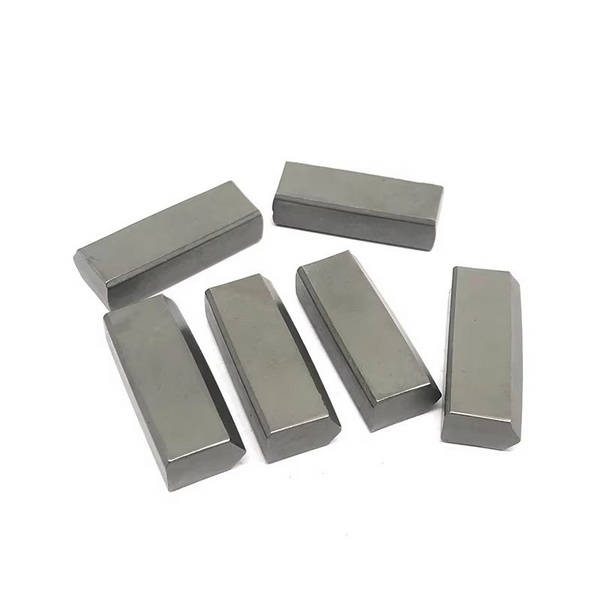
Understanding Carbide Chisel Tips
Carbide chisel tips are wear‑resistant cutting or striking edges made from tungsten carbide that are permanently attached to a steel or alloy chisel body. Unlike standard all‑steel chisels, carbide tips provide a much harder edge that can handle high‑impact work on very hard materials without losing sharpness quickly.
Carbide Chisel Tips Manufacturers and Suppliers usually offer multiple tip geometries—point, flat, tooth, tracing, round, and radius—to match specific working methods. These tips can be used on hand chisels, pneumatic tools, and turning tools, giving professionals a flexible system for roughing, shaping, and fine finishing.
Why Europe Is a Preferred Source
Europe has a deep heritage in stone carving, architecture, and precision tooling, which has naturally developed into a strong cluster of Carbide Chisel Tips Manufacturers and Suppliers. Many European companies focus on premium carbide quality, careful brazing, and consistent heat treatment, making their tools popular in demanding professional markets.
In addition, European producers often specialize in narrow niches—such as stone masonry chisels, woodturning tools, or construction demolition chisels—rather than generic hardware. This specialization helps importers and OEM brands quickly find Carbide Chisel Tips Manufacturers and Suppliers that match specific application requirements.
Core Applications of Carbide Chisel Tips
Carbide chisel tips are used wherever high hardness and wear resistance are necessary. Major applications include:
- Stone masonry and sculpture for granite, marble, sandstone, and engineered stone.
- Hardscaping work such as rock‑facing, trimming, and texturing paving stones and façade elements.
- Woodturning tools, where replaceable carbide inserts create smooth surfaces on hardwoods, softwoods, and composites.
- Construction, renovation, and restoration work, including cutting channels, removing mortar, and fitting stone blocks.
Carbide Chisel Tips Manufacturers and Suppliers generally recommend different carbide grades or geometries for each of these scenarios to balance edge life, toughness, and cutting aggressiveness.
Key Advantages of Tungsten Carbide Tips
Tungsten carbide delivers several technical advantages over traditional steel for chisel tips. The material's extreme hardness provides outstanding wear resistance, allowing tools to stay sharp for many more strikes before resharpening or replacement.
Carbide Chisel Tips Manufacturers and Suppliers also emphasize better efficiency: sharp carbide edges reduce cutting force, improving user comfort and control. Even though carbide tips are more expensive at purchase, their long service life and lower maintenance typically result in a lower cost per hour of use for professionals and industrial users.
How Carbide Chisel Tips Are Manufactured
The production of carbide tips is a sophisticated powder‑metallurgy process that demands tight control at every stage. In general, Carbide Chisel Tips Manufacturers and Suppliers follow steps such as:
- Blending very fine tungsten and cobalt powders, sometimes with other carbides like titanium carbide or tantalum carbide for tailored performance.
- Wet milling the powders in a ball mill to create a homogeneous mixture with consistent particle size.
- Pressing the dried powder in molds or via isostatic presses to form “green” carbide blanks that hold shape but are still relatively soft.
- Pre‑sintering and then final sintering in high‑temperature furnaces, where cobalt melts and binds tungsten carbide grains into a dense solid.
- Precision grinding and profiling using diamond grinding wheels to create sharp cutting edges and accurate geometries for carbide chisel tips.
Because the sintering step causes significant shrinkage and affects final properties, experienced Carbide Chisel Tips Manufacturers and Suppliers are valued for their ability to predict dimensions and maintain stable, repeatable quality.
Typical Product Ranges in Europe
European Carbide Chisel Tips Manufacturers and Suppliers usually offer diverse product lines to satisfy both artisans and large contractors. Common ranges include:
- Hand stone chisels with carbide tips for pitching, lettering, sculpting, and trimming.
- Pneumatic chisels with reinforced carbide tips designed for high‑frequency impact tools.
- Woodturning chisels with interchangeable carbide inserts (square, round, diamond, and radius cutters).
- Specialty chisels for tile, concrete, and brick removal in renovation environments.
When evaluating Carbide Chisel Tips Manufacturers and Suppliers, buyers should check whether the product catalog covers their exact tool interface (shank style, length, and holder design) and required tip shape.
Quality Assurance and Testing Practices
Most serious European manufacturers apply strict quality control to ensure their carbide chisel tips perform consistently in the field. Common practices include hardness testing, transverse rupture strength checks, and dimensional inspections after grinding.
Carbide Chisel Tips Manufacturers and Suppliers also evaluate brazing strength between carbide tips and steel bodies, because poor bonding can lead to dangerous tip failures. Some suppliers run impact tests and long‑term wear simulations on granite or concrete blocks to benchmark tool life before releasing new product designs.
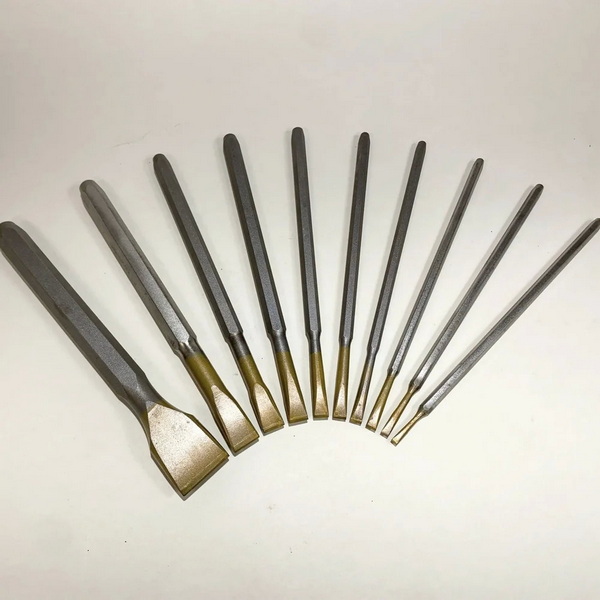
Design and Performance Factors to Consider
Tool performance depends on both material composition and mechanical design. Buyers should pay attention to:
- Carbide grade and binder content: higher cobalt content usually improves toughness, while lower cobalt and finer grain sizes increase hardness and wear resistance.
- Tip geometry: steep, acute angles cut aggressively but are more fragile; more obtuse angles handle shock better for heavy demolition or very hard stone.
- Heat management and working technique: maintaining correct hammering angles and impact force reduces the risk of chipping and maximizes tool life.
Experienced Carbide Chisel Tips Manufacturers and Suppliers can recommend specific grades and geometries for each material and working method, helping OEM brands optimize their product lines.
Digital Catalogs, Images, and Videos in the Buying Journey
Today, product research for Carbide Chisel Tips Manufacturers and Suppliers happens largely online. European tool brands often present high‑quality photos of chisels, macro images of carbide tips, and dimensional drawings that help engineers and buyers verify compatibility.
Videos are increasingly important as well, demonstrating real‑world cutting performance, sharpening techniques, and safe handling. These visual materials allow buyers worldwide to assess build quality and usability without visiting a showroom, which is especially valuable for cross‑border sourcing of carbide chisel tips.
Cooperation Between European Carbide Experts and Asian Metal Factories
Many international tool brands combine European carbide expertise with efficient metal fabrication from Asia. In this model, Carbide Chisel Tips Manufacturers and Suppliers in Europe develop and supply high‑performance carbide tips, while Asian factories supply stainless steel capillary tubes, coiled tubing, plates, pipes, and carbon steel bodies to create complete tool assemblies.
A Chinese factory specializing in precision stainless steel tubes, coils, plates, and carbon steel materials can, for example, produce handles, holders, and structural components for carbide chisels that are then assembled with European tips. This division of labor allows tool brands and wholesalers to offer reliable carbide chisel systems at competitive prices while still highlighting “European carbide” as a selling point.
How Importers Should Evaluate Carbide Chisel Tips Manufacturers and Suppliers
For importers, wholesalers, and OEM brands, choosing the right Carbide Chisel Tips Manufacturers and Suppliers involves more than comparing price lists. Key evaluation criteria include:
- Technical capability and specialization in the target application (stone, concrete, wood, or mixed).
- Ability to provide consistent carbide grades, traceable batches, and clear technical datasheets.
- Readiness to support OEM projects, including private labeling, custom geometries, and packaging solutions.
- Logistics and communication efficiency, such as lead times, minimum order quantities, and responsiveness to inquiries.
Strong Carbide Chisel Tips Manufacturers and Suppliers act as technical partners, not just component vendors, helping brands improve product performance and reduce warranty claims in their target markets.
Best Practices for Using and Maintaining Carbide Chisel Tips
End‑users can only unlock the full value of carbide tips if they apply correct working and maintenance practices. Recommended best practices include:
- Using appropriate hammer size and striking force for the tool and material.
- Maintaining correct working angles so the carbide edge cuts efficiently rather than binding or prying.
- Periodically inspecting tips for micro‑cracks or chips and stopping use if severe damage appears.
- Sharpening with diamond stones or wheels where applicable, following guidelines from Carbide Chisel Tips Manufacturers and Suppliers to preserve edge geometry.
Proper use significantly extends tool life and reduces the risk of premature failure, making high‑quality carbide tips even more cost‑effective for professional users.
Building Long‑Term Supply Partnerships
Once a buyer identifies capable Carbide Chisel Tips Manufacturers and Suppliers in Europe, the next step is building a long‑term partnership. Clear communication on required performance, testing standards, and field feedback enables continuous improvement of carbide tip designs.
Joint development projects—where European carbide specialists cooperate with overseas metal factories—can result in unique chisel systems tailored to specific markets or brands. Over time, these collaborations help both sides refine production, stabilize quality, and expand product ranges that deliver better value to end users.
Conclusion
Carbide chisel tips are essential for high‑precision, high‑durability work in stone masonry, construction, and woodturning, and Europe remains one of the most important sources of advanced Carbide Chisel Tips Manufacturers and Suppliers. By understanding how carbide tips are designed and manufactured, and by carefully evaluating suppliers' technical strength, testing practices, and OEM capabilities, buyers can secure reliable tools that deliver long service life and excellent surface finishes.
For international brands, combining European carbide tip technology with high‑quality stainless steel and carbon steel components from specialized Asian factories creates competitive, high‑performance chisel solutions. With the right Carbide Chisel Tips Manufacturers and Suppliers as partners, tool brands, wholesalers, and professional users gain consistent performance, lower total operating cost, and a strong position in demanding global markets.
FAQ
1.What are the main advantages of sourcing from European Carbide Chisel Tips Manufacturers and Suppliers?
European Carbide Chisel Tips Manufacturers and Suppliers typically offer strong process control, high‑grade carbide materials, and proven designs for stone and construction applications, giving buyers stable and predictable tool performance. Many also provide detailed technical support, testing data, and niche product lines that help OEM brands differentiate their tools in competitive markets.
2.How should buyers compare different Carbide Chisel Tips Manufacturers and Suppliers?
Buyers should compare not only prices, but also carbide grades, dimensional tolerances, available geometries, and documented test results such as hardness and wear performance. Evaluating responsiveness, lead times, and willingness to customize or co‑develop products is equally important when selecting Carbide Chisel Tips Manufacturers and Suppliers for long‑term cooperation.
3.Can carbide chisel tips be customized for special projects?
Yes, many leading Carbide Chisel Tips Manufacturers and Suppliers can customize tip size, angle, radius, and carbide grade for specific materials or working conditions, subject to minimum order quantities. Customization allows tool brands and industrial users to optimize cutting speed, finish quality, and tool life for particular stone types or machining environments.
4.How do carbide chisel tips integrate with stainless steel and carbon steel components?
Typically, specialized Carbide Chisel Tips Manufacturers and Suppliers produce the carbide segments, while separate metalworking factories manufacture stainless steel or carbon steel bodies, handles, and holders that are then brazed or assembled together. This modular supply structure lets each partner focus on its core competence, producing complete carbide chisel systems with attractive cost‑performance ratios for export markets.
5.What maintenance practices do Carbide Chisel Tips Manufacturers and Suppliers recommend to extend tool life?
Manufacturers usually recommend using proper striking force, avoiding prying with the tip, working at correct angles, and stopping use if major chips or cracks appear. They also advise resharpening with suitable diamond abrasives when needed and storing tools in protective holders or racks to prevent accidental edge damage.


