Content Menu
● Introduction to Carbide Chisel Tips
● What Are Carbide Chisel Tips?
● Why Quality Matters for Australian Users
● Leading Carbide Chisel Tips Manufacturers and Suppliers in Australia
● Manufacturing Process of Carbide Chisel Tips
>> 1. Powder Preparation
>> 2. Mixing and Milling
>> 3. Spray Drying or Drying
>> 4. Pressing the Powder into Shape
>> 5. Presintering (Optional)
>> 6. Final Sintering
>> 7. Grinding and Finishing
>> 8. Coating (Optional)
>> 9. Quality Inspection
● Key Applications in Australia
>> Stone Carving and Masonry
>> Mining and Quarrying
>> Construction, Demolition, and Roadwork
>> Woodworking and Metalworking
● How to Select Carbide Chisel Tips Manufacturers and Suppliers
>> Technical Capability and Experience
>> Product Range and Customization
>> Quality Control and Certification
>> Logistics, Support, and After-Sales Service
● Role of Overseas OEM Factories for the Australian Market
● Best Practices for Using and Maintaining Carbide Chisel Tips
>> Correct Tool Selection
>> Proper Mounting and Brazing
>> Striking Technique and Operating Parameters
>> Storage and Handling
● How Carbide Chisel Tips Benefit Australian Projects
● Future Trends for Carbide Chisel Tips
● Conclusion
● FAQ
>> 1.What are the main advantages of carbide chisel tips over steel chisels?
>> 2.How do I choose the right Carbide Chisel Tips Manufacturers and Suppliers?
>> 3.Can carbide chisel tips be repaired or resharpened?
>> 4.Are carbide chisel tips suitable for both stone and concrete?
>> 5.How can overseas OEM factories support brands that sell into Australia?
Introduction to Carbide Chisel Tips
Carbide chisel tips are critical cutting and striking components used in mining, construction, stone carving, woodworking, and metalworking. These tips are valued for their outstanding hardness, wear resistance, and ability to maintain a sharp edge at high temperatures. In Australia, choosing reliable Carbide Chisel Tips Manufacturers and Suppliers is essential for consistent tool performance and long-term cost control.
What Are Carbide Chisel Tips?
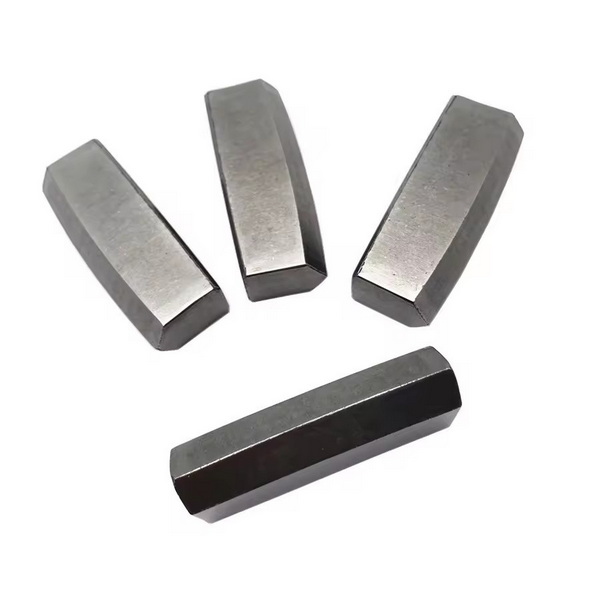
Carbide chisel tips are usually made from tungsten carbide bonded with a metallic binder such as cobalt. The result is a composite material far harder than high-speed steel and significantly more resistant to abrasion. Carbide chisel tips are brazed or mechanically fixed onto steel shanks to form chisels, picks, and other impact tools used in demanding environments.
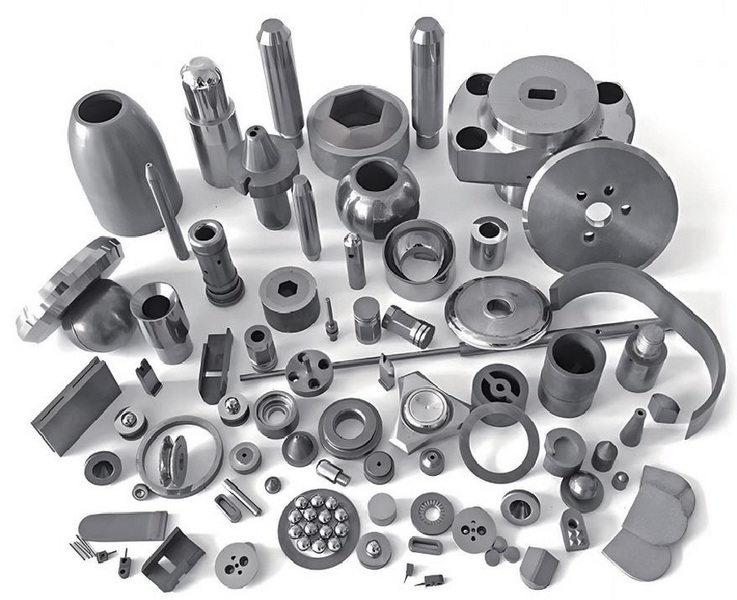
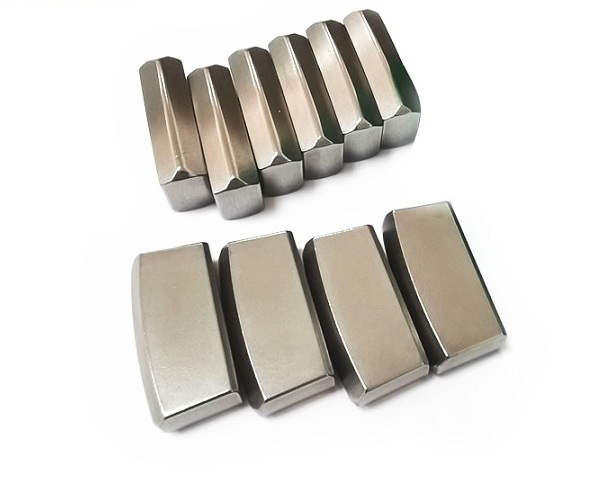
Carbide Chisel Tips Manufacturers and Suppliers provide a wide variety of geometries, including flat chisels, point chisels, lettering chisels, and specialized inserts for pneumatic hammers. Beyond standard shapes, custom carbide tips are designed for very specific tasks, such as cutting particular stone types or working in highly abrasive ground conditions.
Why Quality Matters for Australian Users
In Australian industries where labor and machinery costs are high, tool life is a major economic factor. Using high-quality carbide chisel tips reduces:
- Frequency of tool changeovers.
- Downtime due to tool failure.
- Surface defects and rework on expensive materials.
For quarrying and stone masonry common in Australia, durable tips help maintain clean splits and accurate carving, even on dense sandstone and granite. For infrastructure and mining, robust carbide tips allow higher impact loads and longer service intervals, directly improving productivity.
Leading Carbide Chisel Tips Manufacturers and Suppliers in Australia
Australia hosts a number of capable Carbide Chisel Tips Manufacturers and Suppliers, including original producers of carbide tooling and specialized distributors. Typical categories include:
- Local manufacturers and hardmetal specialists focusing on mining, drilling, and construction tools.
- International carbide brands with Australian subsidiaries or distribution centers.
- Specialized stone carving tool suppliers offering carbide-tipped chisels for stonemasons and sculptors.
- Industrial tooling distributors that stock carbide inserts, brazed tips, and blanks for toolmakers and workshops.
Many of these Carbide Chisel Tips Manufacturers and Suppliers provide technical support on grade selection, tip geometry, and brazing or clamping methods. Some also collaborate with overseas OEM factories to supply private-label and custom carbide tools for Australian and global markets.
Manufacturing Process of Carbide Chisel Tips
Modern Carbide Chisel Tips Manufacturers and Suppliers typically follow a multi-step process to produce robust and consistent tips. While each plant may adjust parameters, the core stages are similar.
1. Powder Preparation
The process starts with very fine powders of tungsten and carbon, sometimes with additives such as titanium or other carbides. These powders are processed to form tungsten carbide, a compound with exceptional hardness. The tungsten carbide powder is then blended with a binder metal, commonly cobalt, in carefully controlled ratios to balance hardness and toughness.
2. Mixing and Milling
The carbide and binder powders are mixed with process additives and sometimes liquid to form a uniform slurry or powder blend. Ball milling or similar techniques are used so every particle mix is consistent. This homogeneous mixture is essential for Carbide Chisel Tips Manufacturers and Suppliers to achieve predictable hardness, density, and tool life across batches.
3. Spray Drying or Drying
If a slurry is used, it is dried—often by spray drying—into free-flowing granules. This step turns the wet mix into a powder suitable for pressing. The dried powder is designed to pack well and flow evenly into molds, which helps avoid internal voids and density variations in the final carbide chisel tips.
4. Pressing the Powder into Shape
The carbide powder is pressed into “green” compacts using:
- Uniaxial pressing for simple shapes.
- Cold isostatic pressing (CIP) for more complex or larger shapes needing uniform density.
In this stage, the compact resembles a finished tip but remains fragile and larger than its final size. Carbide Chisel Tips Manufacturers and Suppliers choose pressing methods according to the complexity and volume of the product.
5. Presintering (Optional)
Some producers presinter the green parts at lower temperatures. This step burns out wax or organic binders and lightly bonds the grains, creating a chalk-like but machinable structure. In this “soft” state, features such as grooves, vents, or special angles can be introduced by machining before the final hardening.
6. Final Sintering
The shaped parts are then sintered at very high temperatures, often in controlled atmospheres or vacuum. During sintering, the binder metal melts and flows, and the carbide grains bond tightly together. The components shrink significantly, densify, and reach their design hardness and strength. This is one of the most critical stages for Carbide Chisel Tips Manufacturers and Suppliers because it determines the final mechanical properties.
7. Grinding and Finishing
After sintering, the carbide is extremely hard and can only be shaped with superabrasive tools such as diamond grinding wheels. Precision grinding sets:
- Final dimensions.
- Cutting angles.
- Surface finish and edge sharpness.
Edge geometry is particularly important for chisels that must both penetrate and survive heavy impact. Some manufacturers also apply honing or micro-chamfering to reduce chipping while maintaining cutting efficiency.
8. Coating (Optional)
For some applications, carbide chisel tips receive wear-resistant coatings such as titanium nitride or other advanced layers. While coatings are more common on machining inserts, specialized impact tips may also be coated to resist abrasion or corrosion in extreme conditions.
9. Quality Inspection
To ensure consistent performance, Carbide Chisel Tips Manufacturers and Suppliers use quality checks such as:
- Density measurement to confirm proper sintering.
- Hardness testing to verify grade specifications.
- Dimensional inspection to ensure fit in tool holders and steel shanks.
- Microstructure analysis where necessary, to confirm grain size and distribution.
Key Applications in Australia
Carbide chisel tips are widely used across Australian sectors with demanding operating environments.
Stone Carving and Masonry
Australian quarries and stonemasons often work with hard sandstone, granite, basalt, and other dense stones. Carbide-tipped lettering chisels, carving chisels, and pitching tools deliver:
- Longer service life compared with plain steel chisels.
- Cleaner lines for inscriptions and sculptures.
- Reduced risk of edge deformation and breakage during heavy blows.
Specialist Carbide Chisel Tips Manufacturers and Suppliers support workshops with different geometries tailored to local stone types.
Mining and Quarrying
In mining and quarrying, carbide chisel tips are mounted on picks, bits, and cutting heads. They endure strong impact and abrasive rock, making toughness as important as hardness. Australian operations value:
- Efficient penetration with minimal breakage.
- Stable performance in abrasive and fractured rock.
- Compatibility with mechanized equipment and high-energy hammers.
Construction, Demolition, and Roadwork
Hydraulic breakers, jackhammers, and demolition tools rely on robust carbide tips when working on concrete, asphalt, and reinforced structures. Using high-quality tips reduces downtimes due to chisel change and helps maintain constant productivity on major infrastructure projects.
Woodworking and Metalworking
Carbide chisel tips also serve woodturners and metalworkers in Australia. For wood, carbide cutters maintain sharpness over long runs and are easier to handle for users who prefer not to sharpen frequently. In metalworking, carbide-tipped tools handle tougher alloys and higher cutting speeds than conventional steels.
How to Select Carbide Chisel Tips Manufacturers and Suppliers
Choosing the right Carbide Chisel Tips Manufacturers and Suppliers is a strategic decision that affects both tool cost and productivity.
Technical Capability and Experience
Look for suppliers with demonstrated expertise in:
- Designing carbide grades for impact and abrasion.
- Producing consistent batches for large orders.
- Supporting special applications such as stone carving or tunneling.
Established suppliers often provide technical guidance on grade, geometry, and brazing or clamping solutions.
Product Range and Customization
A strong supplier offers:
- Standard chisel tips and inserts in multiple sizes.
- Custom designs to match specific steel holders or hammer systems.
- OEM and private-label services for brands and wholesalers.
For foreign brands cooperating with Chinese factories, the ability to customize carbide grades, surface finish, and logo engraving is a valuable differentiator.
Quality Control and Certification
Reliable Carbide Chisel Tips Manufacturers and Suppliers emphasize strict quality systems, including:
- Traceability of raw materials.
- Batch-level testing of hardness and density.
- Process control for pressing and sintering.
Certifications and documented procedures give buyers confidence, especially when tools are used in safety-critical environments.
Logistics, Support, and After-Sales Service
Buyers should consider:
- Lead times for standard versus custom products.
- Minimum order quantities and stock availability in Australia.
- Responsiveness of technical and commercial teams.
- After-sales support in case of premature failures or design changes.
Suppliers who understand Australian conditions and regulations can better support local users.
Role of Overseas OEM Factories for the Australian Market
Many Carbide Chisel Tips Manufacturers and Suppliers serving Australia cooperate with overseas OEM factories, especially in China. A Chinese factory specializing in stainless steel tubes, coils, plates, and carbon steel components can integrate carbide manufacturing and tool assembly under one roof. For foreign brands, wholesalers, and producers, this offers several advantages:
- Stable supply of both carbide tips and steel bodies.
- Consistent quality under customized OEM specifications.
- Competitive pricing supported by efficient mass production.
- Flexible design changes for new product lines and private-label projects.
By aligning production capabilities with Australian performance expectations, OEM partners create a strong supply chain for carbide chisels and related tools.
Best Practices for Using and Maintaining Carbide Chisel Tips
Even with high-quality tips, correct use and maintenance are essential to maximize life and performance.
Correct Tool Selection
Users should match carbide grade and tip geometry to:
- Material hardness and abrasiveness.
- Impact energy of the hammer or machine.
- Desired finish and productivity level.
A tip optimized for soft limestone may chip quickly on very hard granite, while an excessively tough grade might not deliver the necessary sharpness for detailed carving.
Proper Mounting and Brazing
For brazed tips, the joint between carbide and steel must be:
- Clean and free from contamination.
- Heated and cooled according to recommended cycles.
- Inspected for visible defects such as voids or misalignment.
Incorrect brazing can cause premature tip breakage, regardless of carbide quality. Mechanical clamping systems must also be correctly tightened and periodically checked.
Striking Technique and Operating Parameters
Operators should avoid:
- Striking at extreme angles that overstress the edge.
- Prolonged dry impact without adequate relief, which can overheat the tip.
- Using a chisel tip far beyond its wear limit, when it has rounded excessively.
For pneumatic and hydraulic systems, maintaining correct air or oil pressure and ensuring appropriate lubrication helps protect both chisel and machine.
Storage and Handling
Carbide chisel tips, though hard, can be brittle if mishandled. Store and transport them in suitable trays or boxes to avoid edge chipping. Keeping tips clean and dry also supports reliable brazing and prevents corrosion on steel components.
How Carbide Chisel Tips Benefit Australian Projects
In Australia, where projects often run in remote or extreme environments, robust tools are vital. Carbide chisel tips provide:
- Longer continuous operation between replacements, critical in remote mines or large construction sites.
- Higher consistency in cutting depth and surface quality, important for architectural stonework and precision excavation.
- Better total cost of ownership, because the higher upfront cost of carbide is offset by improved productivity and reduced downtime.
By partnering with capable Carbide Chisel Tips Manufacturers and Suppliers, project owners and contractors can specify tools that fully match local rock formations, climate, and regulatory requirements.
Future Trends for Carbide Chisel Tips
The carbide tooling field continues to evolve, and these trends affect Carbide Chisel Tips Manufacturers and Suppliers serving the Australian market:
- Advanced carbide grades with refined grain sizes for improved toughness and wear resistance.
- Enhanced sintering and coating technologies that provide longer life under extreme impact or abrasion.
- More automation and digitalization in manufacturing, delivering better consistency and traceability.
- Increased collaboration between OEM factories and global brands to design application-specific chisel tips for tunnels, mines, quarries, and specialized stone carving.
As these innovations reach the market, Australian users can expect tools with even better performance, lower breakage rates, and more predictable lifetimes.
Conclusion
Carbide chisel tips are indispensable tools for many Australian industries, from mining and quarrying to stone masonry, construction, and precision woodworking. Their combination of hardness, toughness, and heat resistance allows them to outperform conventional steel tools in demanding conditions. By working with experienced Carbide Chisel Tips Manufacturers and Suppliers, buyers can access high-quality tips tailored to their specific materials, equipment, and performance requirements.
Understanding the manufacturing process—from powder preparation and pressing to sintering, grinding, and inspection—helps users appreciate why grade selection and supplier capability matter so much. Proper use, mounting, and maintenance further extend tool life and protect investments in expensive machinery. With strong collaboration between Australian distributors and overseas OEM factories, companies can secure reliable supply, consistent quality, and flexible customization for carbide chisel tools that meet the evolving needs of local projects.
FAQ
1.What are the main advantages of carbide chisel tips over steel chisels?
Carbide chisel tips offer significantly higher hardness and wear resistance than steel, which means they stay sharp longer and withstand more abrasion. This leads to fewer tool changes, better surface finishes, and reduced downtime in industries such as mining, stone carving, and construction.
2.How do I choose the right Carbide Chisel Tips Manufacturers and Suppliers?
Focus on suppliers with strong technical expertise, a proven track record, and rigorous quality control. Check whether they offer suitable carbide grades for your material, provide customization or OEM services, and deliver reliable after-sales support. Local knowledge of Australian conditions is an added advantage.
3.Can carbide chisel tips be repaired or resharpened?
Many carbide chisel tips can be resharpened using diamond wheels or appropriate grinding equipment, as long as sufficient material remains and there are no deep cracks. However, once tips are severely chipped, fractured, or worn very short, replacement is usually more economical and safer than repair.
4.Are carbide chisel tips suitable for both stone and concrete?
Yes, carbide chisel tips can be used on stone, concrete, and other mineral materials, but the optimal grade and geometry may differ. For example, dense granite or reinforced concrete may require tougher grades and specific edge shapes, while softer stone can use sharper geometries for finer detailing.
5.How can overseas OEM factories support brands that sell into Australia?
Overseas OEM factories can produce private-label carbide chisel tips and complete tools according to a brand's specifications. They integrate carbide production, steel component manufacturing, and assembly, then ship to Australian distributors or end users. This approach combines cost-effective production with tailored designs for local applications.


