Content Menu
● Introduction
● What Are Carbide Buttons?
● The Role of UK Manufacturers in the Global Carbide Button Industry
>> Precision Engineering and Innovation
>> Rigorous Quality Assurance
>> Customization and Technical Support
● Industrial Applications of Carbide Buttons
>> Mining and Drilling
>> Oil and Gas Exploration
>> Construction and Infrastructure
>> Advanced Industrial Machining
● Top UK Carbide Button Manufacturers and Suppliers
>> Prima Tooling Ltd
>> Drillwell Ltd
>> Stanford Advanced Materials UK
>> Seco Tools UK
>> Courtney & Co.
● The Carbide Button Manufacturing Process
>> Raw Material Preparation
>> Powder Mixing and Binder Addition
>> Spray Drying and Granulation
>> Pressing and Shaping
>> Sintering and Hardening
>> Grinding and Finishing
>> Coating and Surface Treatment
>> Final Inspection and Packaging
● Methods for Inserting Carbide Buttons in Tool Bits
● Key Criteria for Selecting UK Carbide Button Manufacturers and Suppliers
● Cutting-Edge Innovations in Carbide Button Production
● Outlook for the UK Carbide Button Industry
● Conclusion
● FAQ
>> 1. What materials are used to make carbide buttons?
>> 2. What sectors most frequently use carbide buttons?
>> 3. How are carbide buttons manufactured?
>> 4. What are the main methods for inserting carbide buttons into tools?
>> 5. What makes UK suppliers stand out in the global market?
Introduction
The United Kingdom boasts a vibrant network of carbide button manufacturers and suppliers who contribute significantly to both domestic and global industrial markets. Carbide buttons are renowned for their extreme hardness, resistance to abrasion, and unparalleled durability. These attributes make them indispensable in demanding sectors such as mining, drilling, construction, and infrastructure development. With ongoing advancements in materials science and production processes, UK providers continue to set new standards in quality and customization, serving OEMs, brand owners, and large-scale industrial consumers alike.
What Are Carbide Buttons?
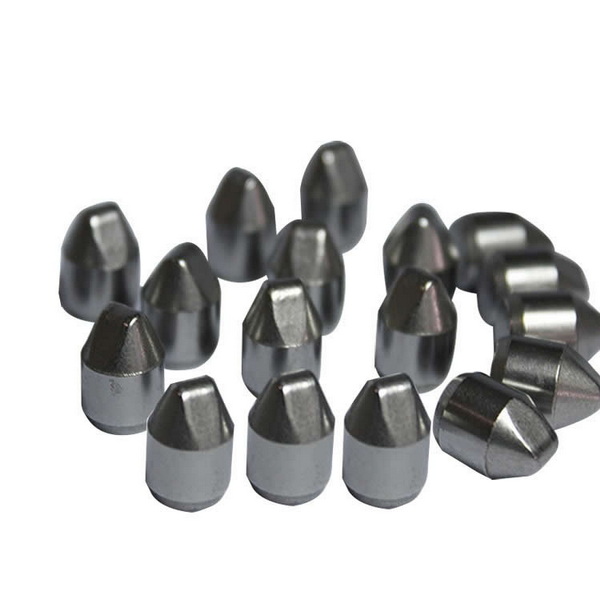
Carbide buttons are small, hardened inserts typically composed of tungsten carbide—a material formed by mixing tungsten and carbon powder, then binding them with metals like cobalt or nickel. This combination produces a dense, tough compound that is often second only to diamond in terms of hardness. Carbide buttons are engineered to deliver superior performance in environments where tools face constant wear and impact, including drill bits, cutting interfaces, rock crushers, and mining equipment.
The Role of UK Manufacturers in the Global Carbide Button Industry
Precision Engineering and Innovation
UK manufacturers leverage advanced machining technology, automation, and skilled engineering expertise to produce high-performance carbide buttons. Their commitment to precision ensures buttons meet exacting specifications in terms of size, shape, geometry, and hardness levels. Many British providers offer bespoke designs that address specific industrial or geological needs, enabling customers to achieve optimal results across a wide range of applications.
Rigorous Quality Assurance
Material selection, rigorous ISO-certified production protocols, and cutting-edge testing facilities underpin the excellence of UK carbide button manufacturers and suppliers. The use of refined tungsten carbide powder, combined with precise sintering and grinding procedures, yields products that demonstrate consistent reliability—even under extreme conditions. Many suppliers also implement additional quality enhancements such as HIP sintering, advanced coating, and automated inspection routines.
Customization and Technical Support
UK suppliers stand out for their willingness to tailor products to individual client requirements. Whether a customer needs unusual button diameters, specialized tip geometries, or carbide grades optimized for specific rock formations or industrial processes, they can rely on British engineering teams to deliver innovative solutions. Technical support services encompass everything from field application consultation to rapid-response prototyping.
Industrial Applications of Carbide Buttons
Mining and Drilling
One of the most crucial uses for carbide buttons lies in mining and drilling tools. Buttons are embedded in drill bits, rock-cutting heads, and tunnel boring machines where they facilitate efficient fracture of hard rock and minerals. High hardness and robust impact resistance reduce tool breakage and replacement frequency, making carbide buttons cost-effective investments for coal mining, mineral extraction, and energy projects.
Oil and Gas Exploration
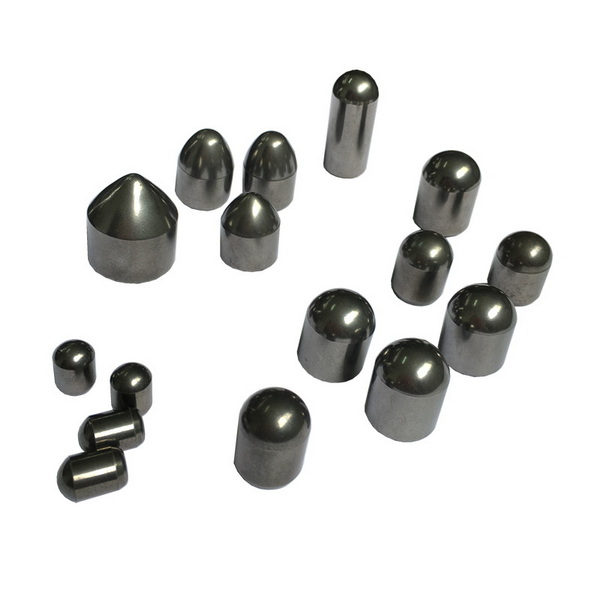
Carbide buttons play a vital role in drilling operations for oil and gas. Their capacity to endure high-pressure, high-temperature environments and repeated impact cycles is essential to ensuring tool longevity and consistent borehole performance. UK suppliers offer multiple button styles—spherical, spoon, wedge, and conical—to suit the varied technical demands of modern hydrocarbon exploration.
Construction and Infrastructure
In the construction industry, carbide buttons are found in road milling bits, concrete demolition tools, pile-driving equipment, and earthmoving implements. Their toughness is especially valuable where steel tools would quickly degrade in abrasive material environments. Customized button designs allow construction engineers to match tooling to the specifics of road surfaces, foundation materials, or demolition projects, maximizing both speed and safety.
Advanced Industrial Machining
Carbide buttons are extensively utilized in the manufacture of industrial cutting tools—such as milling cutters, reamers, and lathe inserts. These tools must tolerate high-speed rotation, extreme temperatures, and constant friction against metal workpieces. The complex structure of carbide, along with specialized coatings, helps ensure stable performance and precision even during prolonged industrial use.
Top UK Carbide Button Manufacturers and Suppliers
Prima Tooling Ltd
A stalwart of the UK cutting tools sector, Prima Tooling Ltd specializes in carbide buttons and advanced CNC tooling solutions. Their production facility uses state-of-the-art CAD/CAM systems, laser measuring instruments, and high-precision grinders capable of fabricating carbide products with intricate geometries. Prima Tooling caters to aerospace, automotive, energy, and infrastructure clients, delivering reliability and technical proficiency.
Drillwell Ltd
Drillwell is recognized for its wide selection of tungsten carbide button products—ranging from rock bits to ground-engaging tools. Their engineering and support staff provide fast turnaround on both standard and custom orders, helping geotechnical professionals, contractors, and mining firms maintain operational continuity. Drillwell's integrated quality control procedures guarantee consistent performance across every batch.
Stanford Advanced Materials UK
Stanford Advanced Materials supplies a variety of button forms, including spherical, conical, wedge, and mushroom-shaped buttons crafted for the mining, oilfield, and industrial cutting sectors. Their focus on material science ensures products offer not only high hardness but also enhanced fatigue resistance and service life. Stanford's flexible production lines allow for custom sizing, composition adjustment, and specialized sintering processes to suit project requirements.
Seco Tools UK
Seco Tools operates globally, providing a comprehensive inventory of carbide wear parts such as rotary, DTH, percussion, and top hammer buttons and inserts. With an R&D-driven approach, Seco invests heavily in developing new carbide grades, advanced coatings, and application-specific solutions. Their UK division supports clients with product training, engineering services, and ongoing technical guidance.
Courtney & Co.
Courtney & Co. is well-known for its commitment to craftsmanship and innovation across industrial and decorative button categories. The company sources premium raw materials worldwide, offering extensive options for industrial button configurations and materials. Their ability to serve both large manufacturers and specialist design houses makes them an important part of the UK supplier landscape.
The Carbide Button Manufacturing Process
The production of carbide buttons is a multi-stage process combining materials science, mechanical engineering, and rigorous quality assurance. Each step is critical to ensuring the final product features optimal hardness, toughness, and dimensional accuracy.
Raw Material Preparation
Production begins with the extraction and refinement of tungsten ores, which are transformed into pure tungsten oxide and subsequently carburized to create tungsten carbide powder. This powder forms the base material for all subsequent processing.
Powder Mixing and Binder Addition
Tungsten carbide powder is precisely blended with cobalt or nickel binders, which serve as the “glue” holding carbide grains together. The proportions are carefully chosen to balance hardness with toughness; regular testing ensures the mixture meets specifications for sintering and end-use performance.
Spray Drying and Granulation
To enhance uniformity, the mixed powder slurry is subjected to spray drying—using streams of hot nitrogen gas to evaporate solvents and yield spherical granules. These granules possess consistent particle sizes, which help achieve uniform density during compaction.
Pressing and Shaping
The spray-dried powder is loaded into automated pressing machines. Depending on button shape—spherical, conical, wedge, dome—precision molds create compact “green” buttons through the application of high pressure, often reaching 12 tons or more. Automated inspection systems ensure each button is free of flaws before sintering.
Sintering and Hardening
Pressed buttons are transferred to furnaces where they are heated in controlled atmospheres (vacuum or hydrogen) at temperatures upwards of 1,400 to 1,600°C. Sintering fuses the carbide and binder, producing finished buttons that shrink to approximately half their original size and achieve diamond-like hardness.
Grinding and Finishing
After sintering, buttons undergo grinding to achieve the precise dimensions and tolerances required for their intended application. Industrial diamond grinding discs shape the carbide with high accuracy, and many manufacturers polish the buttons to improve tool interface and durability.
Coating and Surface Treatment
Buttons may then receive additional surface treatments such as chemical vapor deposition (CVD) or physical vapor deposition (PVD) coatings. These ultra-thin coverings further enhance resistance to wear, corrosion, and impact—key for applications in mining and drilling.
Final Inspection and Packaging
Rigorously tested at every stage, finished carbide buttons are manually inspected once more before laser marking, labeling, and packaging. Top UK manufacturers maintain traceability for every batch, ensuring clients can track product quality and specifications across supply chains.
Methods for Inserting Carbide Buttons in Tool Bits
Once produced, carbide buttons must be securely inserted into drill bits or other industrial tools. Three principal methods are commonly used:
- Copper Brazing: Utilizes a copper filler metal to bond the button to the bit, creating a robust, heat-resistant joint.
- Cold Pressing: Relies on mechanical force to embed buttons within pre-drilled holes, best for less abrasive applications.
- Hot Pressing: Employs controlled heating of the tool bit, expanding button holes for easy insertion. As the bit cools, it contracts, tightly gripping the carbide button and preserving its physical properties. Hot pressing is considered the mainstream method for modern mining and drilling tools, offering optimal wear resistance and stability.
Key Criteria for Selecting UK Carbide Button Manufacturers and Suppliers
Selecting the most suitable supplier involves evaluating several factors:
- Certification and traceability: ISO credentials and material authentication.
- Range of product options: Button shapes, grades, and custom solutions.
- Technical support: Guidance on applications, design modification, and after-sales service.
- Delivery and logistics capabilities: Efficient shipping for domestic and international clients.
- Proven track record: Endorsements, sample testing, and documented field performance.
Cutting-Edge Innovations in Carbide Button Production
UK manufacturers and suppliers continue to invest in new technologies to elevate product quality and sustainability. Automated production lines, material recycling initiatives, and eco-friendly processes reduce environmental impact and maximize resource efficiency. Ongoing research aims to develop even more durable carbide grades, improved binder technologies, and advanced coatings that extend tool life and lower total cost of ownership.
Outlook for the UK Carbide Button Industry
UK carbide button manufacturers and suppliers remain at the forefront of the sector, continually adapting to shifting industrial demands. With global energy, mining, and construction sectors expanding, the need for ever more robust, reliable, and customizable carbide buttons will persist. The UK's focus on research, customer service, and technical excellence ensures continued leadership and innovation, supporting partners in every corner of the world.
Conclusion
The United Kingdom's carbide button manufacturers and suppliers set the industry standard through a blend of advanced engineering, unwavering commitment to quality, and a focus on customer-driven customization. Their products empower countless applications in mining, drilling, construction, oil and gas, and machining. By maintaining rigorous certification, ethical sourcing, and leading-edge production, UK companies build trust with global clients—OEMs, wholesalers, and industrial engineering firms alike. For any business seeking high-performance carbide solutions with reliable post-sales support, the UK's suppliers present a compelling choice.
FAQ
1. What materials are used to make carbide buttons?
Carbide buttons are typically manufactured from tungsten carbide mixed with cobalt or nickel binders. This composition offers extreme hardness, toughness, and resistance to wear, perfectly suiting them for tough industrial environments.
2. What sectors most frequently use carbide buttons?
Carbide buttons are integral to mining, oil and gas drilling, construction, infrastructure, and advanced industrial machining—especially in applications requiring drilling, cutting, or milling of hard materials.
3. How are carbide buttons manufactured?
The manufacturing process includes powder mixing and spray drying, granulation, pressing, sintering at extremely high temperatures, precision grinding, optional coating, and final manual inspection. This results in buttons with exceptional hardness and structural integrity.
4. What are the main methods for inserting carbide buttons into tools?
Three common insertion methods are copper brazing, cold pressing, and hot pressing. Hot pressing is widely favored for maintaining the original properties of the button and delivering the highest tool stability and wear resistance.
5. What makes UK suppliers stand out in the global market?
UK manufacturers are recognized for their precision engineering, strict adherence to quality and certification standards, capacity for customization, advanced material science, and comprehensive technical support.


